


Choosing the right quilt/doona for better sleep
Simple recommendations based on climate, sleep style, and personal comfort.
Not sure which doona is right for you?
This quilt guide covers GSM, fill types, and climate-friendly recommendations to help you find the perfect doona for your sleep style. Whether you're always overheating, forever freezing, or sharing a bed with someone who’s the complete opposite.
Hot or Cold Sleeper?

Best Materials for Hot Sleepers
Stick to lightweight, breathable options like bamboo or cotton with a lower GSM.

Best Materials for Cold Sleepers
Choose insulating, temperature-regulating materials like wool or high GSM cotton.
Not everyone needs two doonas, but for some, a seasonal swap makes all the difference.
Climate-Based Doona Recommendations

Tropical Climate
Eg) Northern Queensland
Best GSM: 200 – 300
Best Fill: Bamboo, Cotton or a blend of the two
Why it works: Tropical nights call for something light and breathable. Bamboo is cooling and moisture-wicking, while cotton keeps things soft and airy, perfect for humid sleep.
Mild Climate
Eg) Sydney, Melbourne
Best GSM: 250 – 450
Best Fill: Cotton or Wool
Why it works: You’ll want something that stays cosy in winter without overheating in summer. Cotton breathes well, and wool adjusts naturally to your temperature.

Dry Climate
Eg) Outback, Central Australia
Best GSM: 300–500
Best Fill: Wool
Why it works: Wool is an excellent material for dry climates due to its unique properties that help regulate temperature and manage moisture in extreme conditions.

Cold or Alpine Climate
Eg) Snowy Mountains, Tasmania
Best GSM: 400–600
Best Fill: Wool
Why it works: In seriously cold regions, you’ll need a doona that holds in heat. Wool provides natural insulation without trapping too much moisture, ensuring that your sleep environment stays dry and comfortable.
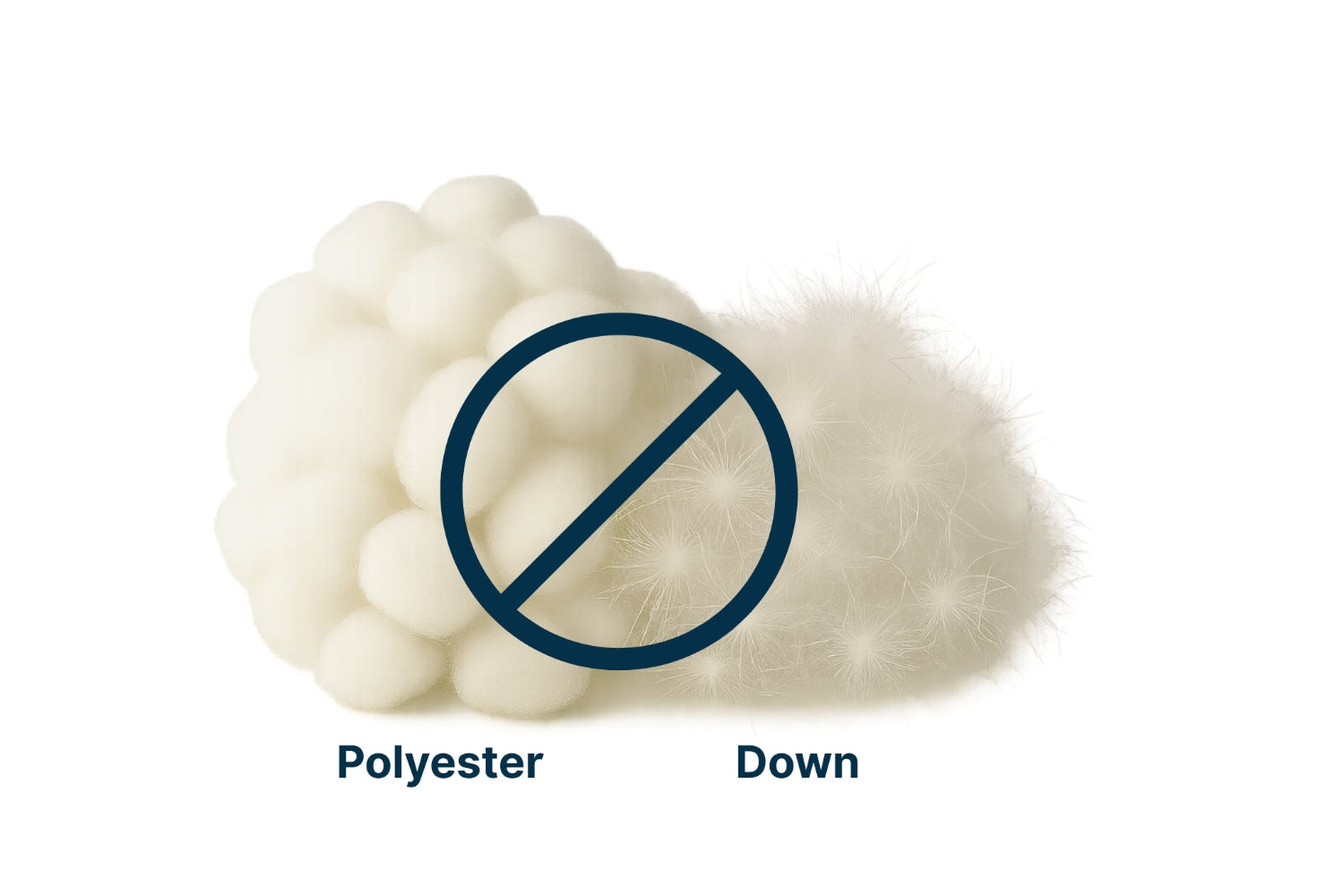
Why We Don’t Recommend Polyester or Down
We avoid polyester because it traps heat and isn't breathable. It's not great for your sleep or the planet.
We don’t support down due to animal welfare concerns, in some cases down can be sourced ethically, but make sure to check for certifications.
Instead, we stick to natural, breathable fibres like bamboo, cotton, and wool. Better for you, and better for the world.
Common Questions About Quilts and Doonas
Do you sell doonas/quilts?
Not just yet. But doonas are definitely on our future wish list.
In the meantime, we’ve put together a simple guide to help you choose the right doona for your sleep needs, so you can still get the most out of your Scandi setup.
What’s the difference between a doona, quilt, duvet and comforter?
A doona and a duvet are essentially the same thing, “Doona” is just the Aussie term for what other countries call a 'duvet'. A comforter, on the other hand, is usually quilted and used without a cover, and a quilt is typically lighter, layered, and stitched together with decorative patterns.
But there's no wonder it’s confusing, even retailers use the terms inconsistently. Like most businesses, we stick to the most commonly searched lingo so you can actually find what you’re looking for.
What does GSM mean, and how does it affect warmth?
GSM stands for grams per square meter and indicates the weight/amount of the quilt filling. Generally, a higher GSM means a warmer quilt, better for winter and a lower GSM means cooler and better for summer.
Which filling material is best for hot or cold sleepers?
Hot sleepers may prefer breathable materials like bamboo or cotton, which wick moisture and allow airflow. Cold sleepers might opt for wool or down, known for their insulating properties.
What are your concerns with down?
Down can be a great insulator, but we only recommend it if it’s ethically sourced to ensure animal welfare standards are being met.
In terms of performance, down is best suited to cold and dry climates. It offers excellent warmth without weight, but it’s not ideal for humid environments and can easily overheat hot sleepers. For these reasons, we typically steer toward wool or other natural, breathable fibres.
Can I use the same quilt year-round?
Some quilts are designed for 'all seasons', but many people switch between lighter quilts in summer and heavier ones in winter to maintain comfort.
